
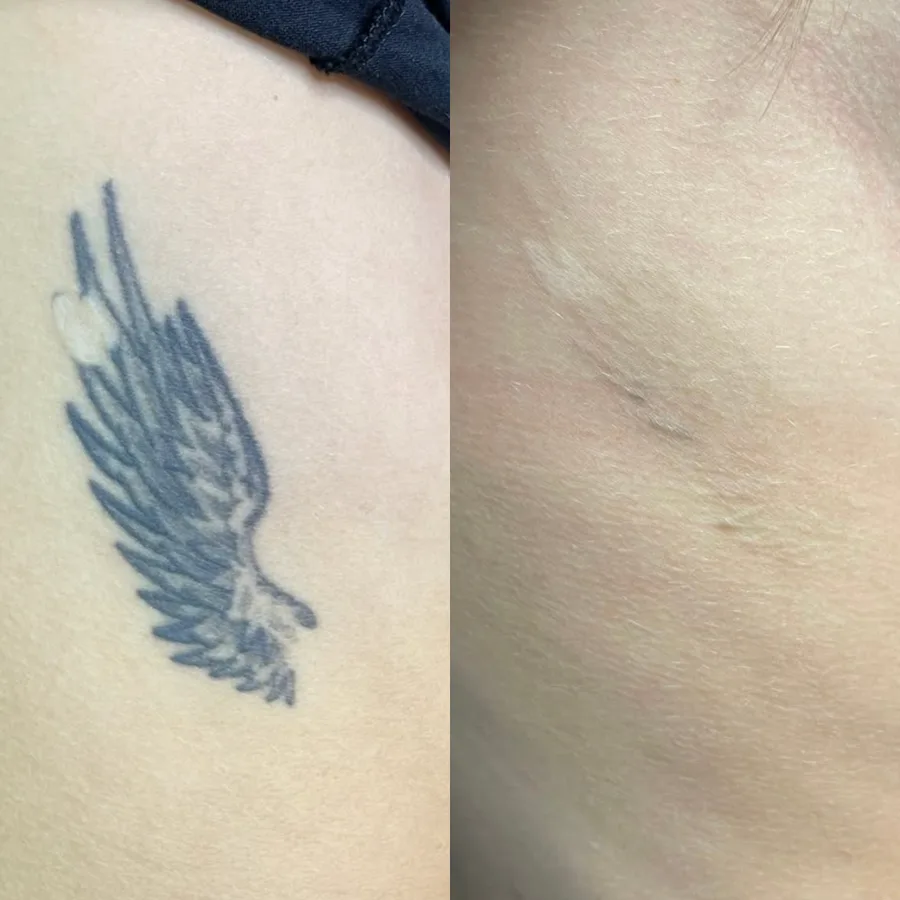
What the two names mean
Both are lasers that break ink into tiny particles your body can clear. The difference is the length of each pulse:
- Q-switched Nd:YAG lasers fire pulses lasting a few nanoseconds (billionths of a second). They have been the standard for tattoo and permanent makeup removal for decades, and are still used in medical and specialist clinics worldwide.
- Picosecond lasers fire even shorter pulses, measured in picoseconds (trillionths of a second). A true picosecond laser lists its pulse duration in its specifications, usually several hundred picoseconds.
Both work by a photomechanical effect: a very short, powerful pulse shatters the pigment while leaving the surrounding skin largely intact.
Is picosecond always better?
Not automatically. Studies suggest picosecond lasers can clear some inks, especially stubborn blue and green or very small particles, in fewer sessions in some cases. For black and dark inks, and for most brow PMU and microblading, a well-used Q-switched Nd:YAG laser remains highly effective. Results vary from person to person in both cases, and every tattoo still needs a set of sessions, whichever laser is used.
It is also worth knowing that the word “pico” is widely used in marketing. Some machines are sold as picosecond without a published pulse duration to prove it. If a picosecond laser matters to you, ask the clinic which machine they use and what its pulse duration is.
What matters more than the label
- The right wavelength. 1064nm treats black and dark pigments. 532nm treats red and warm tones, which are very common in brow PMU, because many brown pigments are mixed with red. A laser without 532nm will struggle with these.
- Settings chosen for your skin. Energy, spot size and interval are adjusted to your skin type and pigment. Too aggressive can scar or change skin colour; too gentle wastes sessions.
- A patch test. Some cosmetic pigments, such as those with titanium dioxide or iron oxides, can darken or change colour under any laser. A patch test shows how your pigment reacts before we treat the whole area.
- Time between sessions. Your body clears the ink between treatments. Usually 6–8 weeks apart gives the best fading with the least stress on the skin.
- Experience and aftercare. An experienced specialist, proper cooling and good aftercare protect your skin and your natural brow hair.
Questions to ask any clinic
- Which laser do you use, and which wavelengths does it have?
- If it is called picosecond, what is its pulse duration?
- Do you do a patch test first?
- Are you insured for laser tattoo and PMU removal?
- Can I see before and after photos of cases like mine?
Our approach
At Alla Laser Clinic we use a Q-switched Nd:YAG laser with both 1064nm and 532nm, so we can treat dark pigments and the red tones that often appear in brow PMU. Every course starts with a consultation and patch test, and we will always tell you honestly what result is realistic for your skin and pigment. You can see real client results on our results page.
Ready to talk about your treatment?
Every plan starts with a consultation and patch test. The £15 comes off your first session.
This article is general information, not medical advice. Your treatment plan is always based on an individual assessment.