
Your questions, answered
Everything clients usually ask about laser removal of tattoos and permanent makeup. Type a word to search.
About the treatment
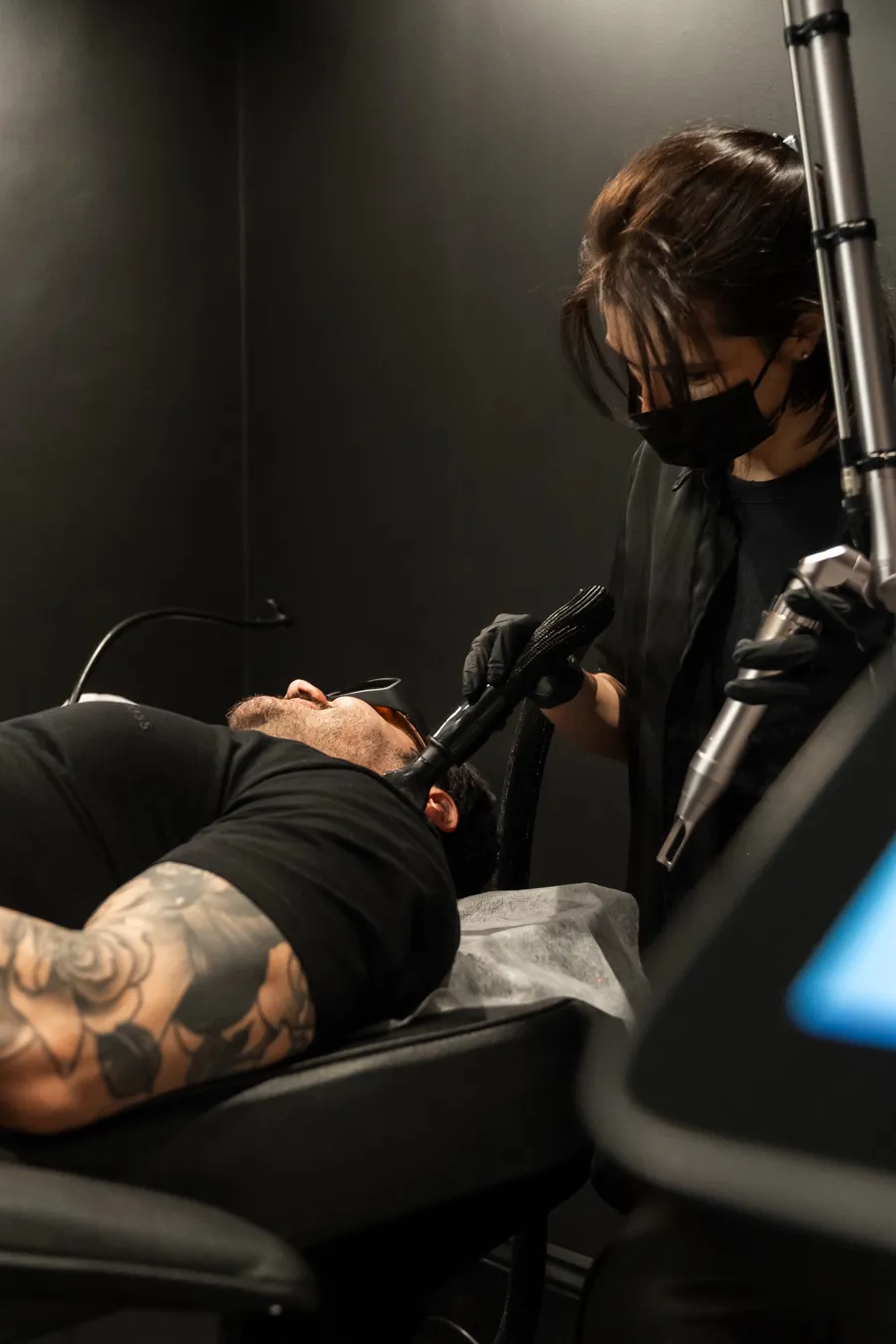
How does laser tattoo removal work?
Laser energy targets the pigment in the tattoo or permanent makeup and breaks it into smaller particles. Your body then gradually processes and eliminates these particles naturally over time.
Is laser removal painful?
You may feel some discomfort, often described as a snapping or stinging sensation. For tattoos and SMP, we use CoolPex before, during and after the procedure, plus a cryo cooling system that delivers cold air at up to -30°C to reduce discomfort and support the skin. For brows, we use cool packs. The level of discomfort depends on the area, the pigment and your sensitivity.
What happens at the consultation and patch test?
We assess your pigment and skin, go through your health and consent, and explain a realistic plan: full removal or lightening, sessions, intervals and aftercare. A small patch test on a discreet spot shows how your skin and pigment respond, which is especially important for PMU. We check the result before your first full session.
Why is my plan different from someone else’s?
Every tattoo, PMU treatment and skin type is different. Your settings and session intervals are chosen individually based on pigment, skin type, treatment area, previous treatments and how your skin responds.
Can I have laser removal if I am pregnant or breastfeeding?
Laser treatment is generally postponed during pregnancy. If you are pregnant, breastfeeding, taking medication, or have a medical condition that may affect treatment or healing, please discuss it with us before booking.
Sessions & results
How many sessions will I need?
It varies from person to person. It depends on the pigment used, its depth, colour, age, location and your individual skin response. We assess your progress throughout the removal process.
How long should I wait between sessions?
In general, 6–8 weeks between sessions is recommended. The interval is individual and may be adjusted depending on your skin and how well the pigment is clearing.
Will my tattoo disappear after one session?
No. Tattoo removal always takes a set of sessions. The laser breaks the pigment down during each treatment, but your body needs time to clear the particles, so the tattoo fades gradually from one session to the next. We plan your course at consultation.
When will I see the results?
Removal continues after your appointment as your body clears the fragmented pigment. Changes often become more noticeable over the following weeks, which is why enough time between sessions matters.
Can I have another treatment sooner if it still looks dark?
Not necessarily. The tattoo or PMU may still be fading even when the change is not yet visible. Treating too often does not speed up removal and may not give the skin enough time to recover.
Why does the tattoo sometimes look darker after treatment?
Some pigments can temporarily look darker after laser treatment. This can be part of the normal response, but pigment behaviour varies a lot, so any unexpected change should be assessed.
Can all tattoo colours be removed?
Different colours respond differently to laser wavelengths. Some are easier to remove than others, and certain pigments are particularly challenging. Your pigment is assessed before and during the treatment course.
Permanent makeup (PMU)
Is laser removal suitable for permanent makeup?
Yes for most cases. PMU pigments can behave differently from tattoo ink, so careful pigment assessment and the right protocol are important. Laser removal is highly effective for around 90% of PMU cases, with minimal downtime. If another method suits your pigment better, we will tell you.
Can permanent makeup change colour after laser treatment?
Yes. Some PMU pigments can shift colour, temporarily or permanently, depending on their ingredients. This is why PMU removal needs careful assessment and the right laser settings.
What should I expect after eyebrow removal?
Mild redness and swelling in the treated area are completely normal. This is a temporary reaction and settles as the skin heals.
Healing & aftercare
What should I expect right after treatment?
Redness, warmth, swelling, tenderness or itching are normal. You may see a white, frosty look on the area, called frosting. It usually fades within about 30 minutes and is most visible in the first 2–3 sessions.
Is swelling normal?
Yes. Mild swelling can occur, particularly in the first few hours. Something cool can help soothe the skin. If swelling is severe, persistent or comes with other concerning symptoms, contact us or seek medical advice.
What if the treated area becomes itchy?
Itching can be part of healing, as the skin may release histamine. A cool compress helps. If needed, an antihistamine may be taken according to its instructions, if it is suitable for you.
Can I scratch or pick the treated area?
No. Avoid scratching, picking or removing flakes, scabs or blisters. Let the skin heal naturally, as picking increases the risk of irritation, infection and scarring.
Can I use retinol after treatment?
Stop retinol and retinol-based products for one week after treatment to avoid unnecessary irritation and swelling, and follow your aftercare instructions.
Can I exercise, swim or use a sauna?
Avoid intense exercise straight after treatment, especially if it causes heavy sweating or friction on the area. Avoid pools, hot tubs and saunas while the skin heals. We will advise when you can return to them.
Can I expose the treated area to the sun?
Avoid direct sun while healing and protect the area from UV. Once healed, use a broad-spectrum sunscreen. Sun exposure can increase the risk of pigmentation changes.
Will laser removal leave a scar?
When performed appropriately and with good aftercare, laser removal is designed to minimise the risk of scarring. No procedure is completely risk-free, and individual healing, previous skin trauma and aftercare can affect the outcome.
What happens if I don’t follow the aftercare?
Poor aftercare can increase irritation, slow healing and raise the risk of pigmentation changes and other complications. Following the instructions gives your skin the best conditions to recover.
What should I do if I notice something unusual?
If you have severe or worsening pain, significant swelling, spreading redness, pus, extensive blistering, signs of infection, or any reaction that worries you, contact us and seek medical advice.
No match. Ask us directly on WhatsApp.
Laser removal is a gradual process. Patience, the right intervals and consistent aftercare all help you get the best result. Read the full aftercare guide.
Still have a question?
Send us a message or a photo on WhatsApp. We are happy to advise before you book.